
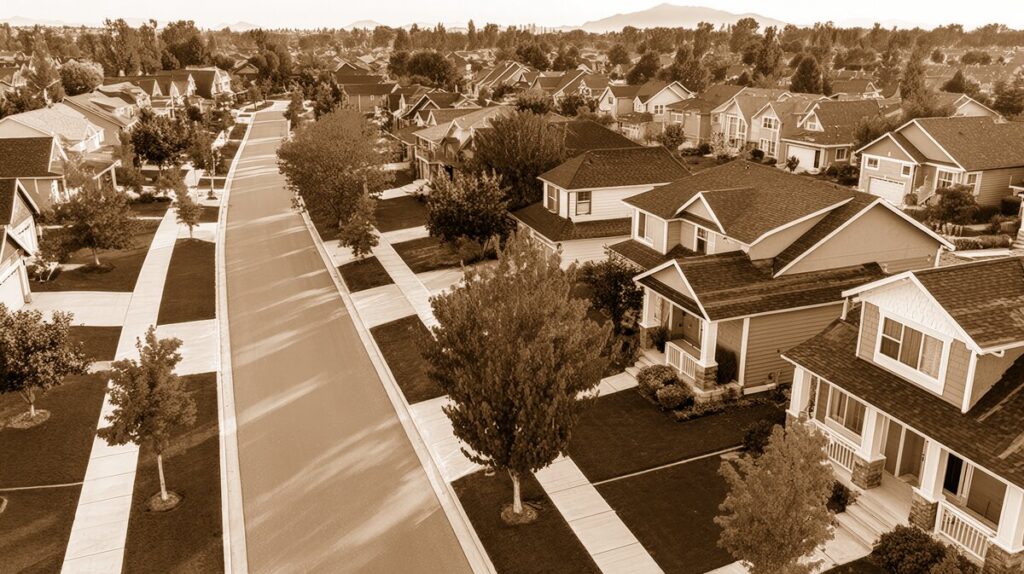
A Newer Neighborhood with Deep Local Roots
The Boulders at Legend Trail may look like a distinctly modern Broomfield neighborhood—with its well-kept residences, quiet internal streets, and convenient location near Broadlands—but its story reaches back much farther than the homes themselves. Like many communities in northwestern Broomfield, it was built during the city’s rapid transformation from an agricultural area into one of the northern Front Range’s most desirable places to live.
Long before streets such as Boulder Circle, Boulder Point, Stone Circle, Rock Point, Plaster Point, Broadlands Lane, and Legend Way appeared on maps, this landscape belonged to a much older story. Indigenous peoples, including the Cheyenne and Arapaho, lived throughout the region for thousands of years. Archaeological evidence in the broader Broomfield area indicates human habitation dating back at least 7,000 years. Later, farms, ranches, orchards, and transportation routes shaped the open plains between Denver and Boulder. ([broomfield.org](https://www.broomfield.org/history?utm_source=openai))
From Farmland to Planned Community
Broomfield’s agricultural identity remained strong into the twentieth century. The area was known for broad fields, rural roads, and family farms before postwar growth began changing the landscape. The construction of the Denver-Boulder Turnpike—now part of U.S. 36—during the 1950s helped make Broomfield especially attractive to people who wanted a suburban home within reach of both Denver and Boulder. The roadway connected the area to major employment centers while preserving the appeal of a community outside the traditional urban core. ([broomfield.org](https://www.broomfield.org/history?utm_source=openai))
The Boulders at Legend Trail emerged during the next major chapter of that expansion. Public property records show residences in the subdivision dating primarily from the early-to-mid 2000s, with examples on Boulder Circle, Boulder Point, Stone Circle, Rock Point, Plaster Point, and Broadlands Lane constructed between approximately 2002 and 2006. ([broomfield.org](https://www.broomfield.org/DocumentCenter/View/37672?utm_source=openai))
That timing is important. By the early 2000s, Broomfield was no longer simply a small community along the turnpike. It had become a carefully planned city and county with expanding neighborhoods, schools, business parks, recreational facilities, and interconnected trails. The Boulders at Legend Trail reflects that era: a community designed around convenience, shared maintenance, nearby open space, and a recognizable neighborhood identity.
How the Neighborhood Got Its Name
The name “The Boulders at Legend Trail” combines two ideas that feel very natural in this part of Colorado.
“Boulders” evokes the Front Range landscape and the visual presence of large stones, foothills, and rugged western scenery. The neighborhood’s street names reinforce that theme. Boulder Circle, Boulder Point, Stone Circle, Rock Point, and Plaster Point give the community a vocabulary of rock, terrain, and craftsmanship.
“Legend Trail” connects the neighborhood to the broader naming traditions of the area, where developers often used names suggesting western character, outdoor recreation, and a sense of place. The related Falls at Legend Trail community lies nearby, and public housing records identify that association as established around 2000. ([coloradohoadirectory.com](https://coloradohoadirectory.com/hoa/the-falls-at-legend-trail-owners-association-inc?utm_source=openai))
There does not appear to be a single historic trail or landmark officially documented as the source of the name. Instead, “Legend Trail” is best understood as a development-era name—one that helped create a shared identity for a cluster of residential communities built during Broomfield’s early twenty-first-century growth.
A Neighborhood Built for Everyday Living
The Boulders at Legend Trail is primarily a residential community, and its character comes from the way it fits into the surrounding neighborhood network. Homes are arranged along short residential streets and courts, creating a quieter environment than the larger arterial roads around it. The mix includes ranch-style and two-story residences, with construction records showing both attached and detached housing forms. ([broomfield.org](https://www.broomfield.org/DocumentCenter/View/37672?utm_source=openai))
The neighborhood’s location near Broadlands places it close to one of Broomfield’s best-known master-planned areas. Residents benefit from access to local streets, regional shopping, schools, parks, and the broader trail system. The nearby Falls at Legend Trail community, along Lowell Boulevard and Broadlands Drive, is another reminder that this part of Broomfield was planned as a connected group of neighborhoods rather than an isolated subdivision. ([coloradohoadirectory.com](https://coloradohoadirectory.com/hoa/the-falls-at-legend-trail-owners-association-inc?utm_source=openai))
For longtime residents, the appeal is often found in the ordinary details:
- Morning walks along Boulder Circle or Stone Circle.
- Children biking between neighboring streets.
- Mature landscaping softening homes built during the early 2000s.
- Quick access to parks, trails, shopping, and major roads.
- Mountain views and changing skies that keep the landscape connected to Colorado’s western setting.
Parks, Trails, and the Broomfield Connection
Although The Boulders at Legend Trail does not have a nationally recognized historic building within its boundaries, its heritage is closely tied to Broomfield’s investment in parks and outdoor connections. The city has developed an extensive network of trails, open spaces, lakes, and neighborhood parks that help link newer residential areas with older community landmarks.
That network is part of what distinguishes modern Broomfield from a conventional bedroom suburb. The city’s trail planning emphasizes connections among neighborhoods, open-space areas, and regional destinations. Residents of The Boulders can experience this larger civic landscape through nearby walking routes and by traveling to destinations such as County Commons, the Broomfield Bay Aquatic Park area, community parks, and open-space trails. ([broomfield.org](https://www.broomfield.org/DocumentCenter/View/44414/Appendicies-1?utm_source=openai))
The city’s heritage also remains visible at a broader scale. The Broomfield Depot, historic agricultural sites, and the original town area near 120th Avenue and Wadsworth Boulevard tell the story of an earlier community shaped by rail, farming, and local commerce. These landmarks may not stand inside The Boulders at Legend Trail, but they provide the historical backdrop for understanding how the neighborhood came to be. ([broomfield.org](https://www.broomfield.org/history?utm_source=openai))
How the Neighborhood Has Evolved
Over the decades, The Boulders at Legend Trail has matured from a new construction community into an established residential neighborhood. The young trees and freshly built homes of the early 2000s have given way to fuller landscaping, more settled streetscapes, and residents with long memories of the area’s early days.
The neighborhood has also evolved as Broomfield itself has changed. What was once the edge of suburban development is now part of a busy, connected metropolitan community. New businesses, schools, transportation improvements, and recreational amenities have made the surrounding area more complete, while the neighborhood’s internal streets retain a residential calm.
That balance is the real heritage of The Boulders at Legend Trail. It represents the modern chapter of Broomfield’s story: a place built on land with ancient human history, shaped by agriculture and transportation, and ultimately transformed into a community where people can put down roots.
For residents, the neighborhood’s special quality is not tied to one grand monument. It lives in the names on the street signs, the familiar walk around the block, the views toward the foothills, and the sense that home is connected to both Broomfield’s past and its continuing future.